ServicesVinyl Composition Tile
Vinyl Composition Tile in West University Place
VCT is the hard-wearing tile you see in schools and old diners, and it works just as well in a laundry room or kitchen. We check what is under your current floor first, fix the base, and lay tile that stays flat and tight.
A Plain, Tough Floor for Hard-Use Rooms
Vinyl composition tile is mostly limestone held together with vinyl. It comes in 12-inch squares about an eighth of an inch thick. It is set in adhesive, rolled flat, then sealed with coats of floor finish. It takes scuffs, wet boots and dragged chairs without much fuss, and a damaged tile can be swapped out on its own.
It is the right call for a mudroom, laundry, utility room, playroom or a retro checkerboard kitchen. It is not the right call if you want a soft, quiet floor or no upkeep at all. VCT needs its finish refreshed now and then. If that sounds like too much, we will point you to luxury vinyl tile or luxury vinyl plank instead.
In older houses the real work is underneath. Thin tile shows every bump, old glue ridge and gap in the floor below. So most of our time goes into the base.
What the Job Includes
- A look under the old floor
- We pull a register cover or lift a corner to see how many layers are down there. Older homes often have sheet vinyl over old tile over plank boards. We tell you what we found before we price anything.
- Removal or cover-over
- Some old floors come up. Others are sound enough to leave in place and cover with new underlayment. We explain which way makes sense for your room and why.
- Subfloor prep
- On a slab we grind high spots and fill low ones with patch. On a pier-and-beam floor we add a smooth plywood underlayment, fastened tight, so board seams do not telegraph through.
- Layout and setting
- We snap lines from the center of the room so the cut tiles at the walls come out even. Tiles go into fresh adhesive and get rolled with a heavy roller to seat them.
- Finish coats
- New VCT is dull and porous out of the box. We put down several thin coats of floor finish so it shines and resists stains.
- Trim and cleanup
- We set base or quarter round, fit transitions at doorways and haul off old material and scraps.
Signs Your Floor Is Ready for VCT
Old tiles popping loose
Square tiles that crack, lift or slide usually mean the old adhesive has given up. Gluing them back rarely lasts.
Black glue at the joints
Dark adhesive oozing between old tiles is common in older floors. It is a sign the floor needs a fresh start, and a reason to test before anyone scrapes it.
Sheet vinyl curling at the edges
Worn sheet vinyl in a laundry or back hall peels at seams and doorways. VCT holds up better to that kind of traffic.
Lumps and lines you can see
Ridges showing through the current floor point to a rough base. New tile will show the same lines unless the base is fixed.
A room that takes a beating
Dogs, kids, tools or a washer that leaks now and then. VCT is cheap to repair one tile at a time.
What Moves the Price
The tile itself is one of the cheaper floors out there. What changes your total is mostly the prep. We give you a written price that breaks out removal, prep and install so you can see where the money goes.
Room size and shape
Square footage matters, but so do closets, cabinets and doorways that need a lot of cuts.
What is coming up
One layer of sheet vinyl comes up fast. Three layers glued down over the years take longer, and suspect material may need testing first.
Condition of the base
A flat slab needs little work. An uneven slab or a plank floor that needs new underlayment adds time and material. Slab moisture in our humid climate sometimes calls for a sealer under the glue.
Pattern
One solid color is quickest. Checkerboards, borders and inset designs take more layout and cutting.
Moving things out
Appliances like a washer, dryer or fridge have to come out and go back. We price that in so it is not a surprise.
How a VCT Job Runs
- 1
Phone call and visit
You tell us about the room. We come look, check the layers and the subfloor, and measure.
- 2
Testing if needed
Old 9-inch tiles and black cutback glue can contain asbestos. If we suspect it, we stop and recommend a lab test before anything is disturbed. Often the safest choice is to cover it, not tear it up.
- 3
Tile acclimates
Boxes sit in the room for a couple of days with the AC running so the tile settles to your home's temperature.
- 4
Prep and install
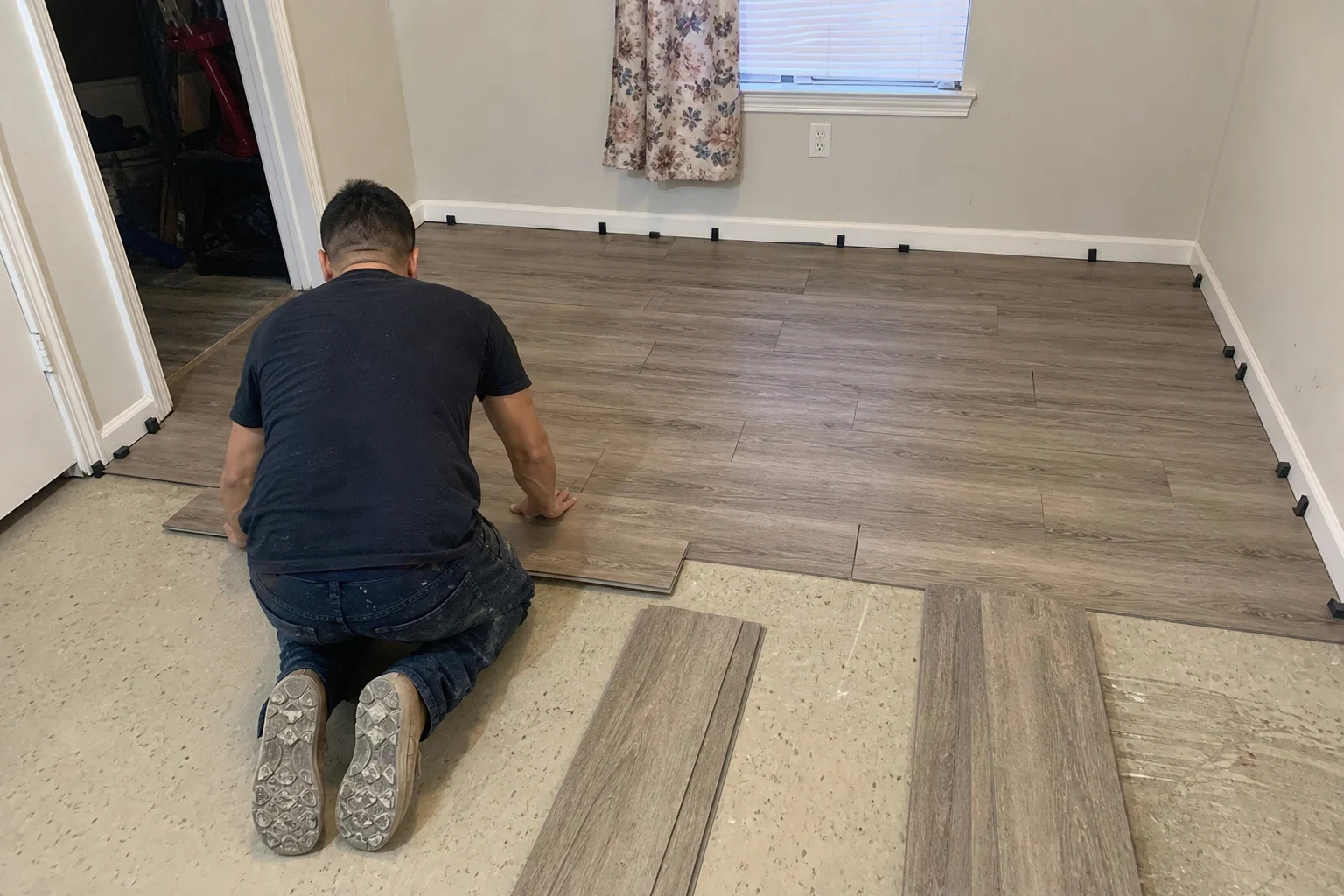
We clear the room, fix the base, spread adhesive, set and roll the tile. Most single rooms take a day or two, depending on prep.
- 5
Finish and walk-through
Finish coats go on and dry. We walk the floor with you, show you how to care for it and tell you when furniture can go back.
VCT Questions We Hear
Is VCT the same as luxury vinyl tile?
No. VCT is thinner, harder and mostly limestone, and it needs floor finish. Luxury vinyl tile is thicker, has a printed wear layer and needs no waxing. If you want low upkeep, look at our luxury vinyl tile page.
Does VCT really need waxing?
It needs floor finish, which people call wax. After the first coats, plan on a light cleaning and a fresh coat every so often in busy rooms. Day to day, a damp mop with a neutral cleaner is enough.
Can you put it right over my old tile?
Sometimes. If the old tile is tight, flat and still stuck down firmly, we can cover it with underlayment or a skim coat and lay new tile on top. Loose or broken old tile has to be dealt with first.
What if my old floor has asbestos?
We will not sand, grind or scrape a floor we suspect. We recommend getting it tested by a qualified lab. If it is positive, covering it in place is often the simplest path, and we will explain your options.
How soon can we use the room?
Light foot traffic is usually fine once the finish is dry, often the same evening. Give it a day or so before moving heavy appliances back, and use felt pads on chair legs.
Will it work in a kitchen?
Yes. VCT handles spills and dropped pans well, and a black-and-white checkerboard suits an older kitchen. Just wipe up standing water so it does not sit at the seams.
Find Out What Is Under Your Floor
Give us a call and tell us about the room. We will come look at the layers and the base, then give you a straight answer on VCT and a written price.