ServicesCarpet Tile
Carpet Tile in West University Place
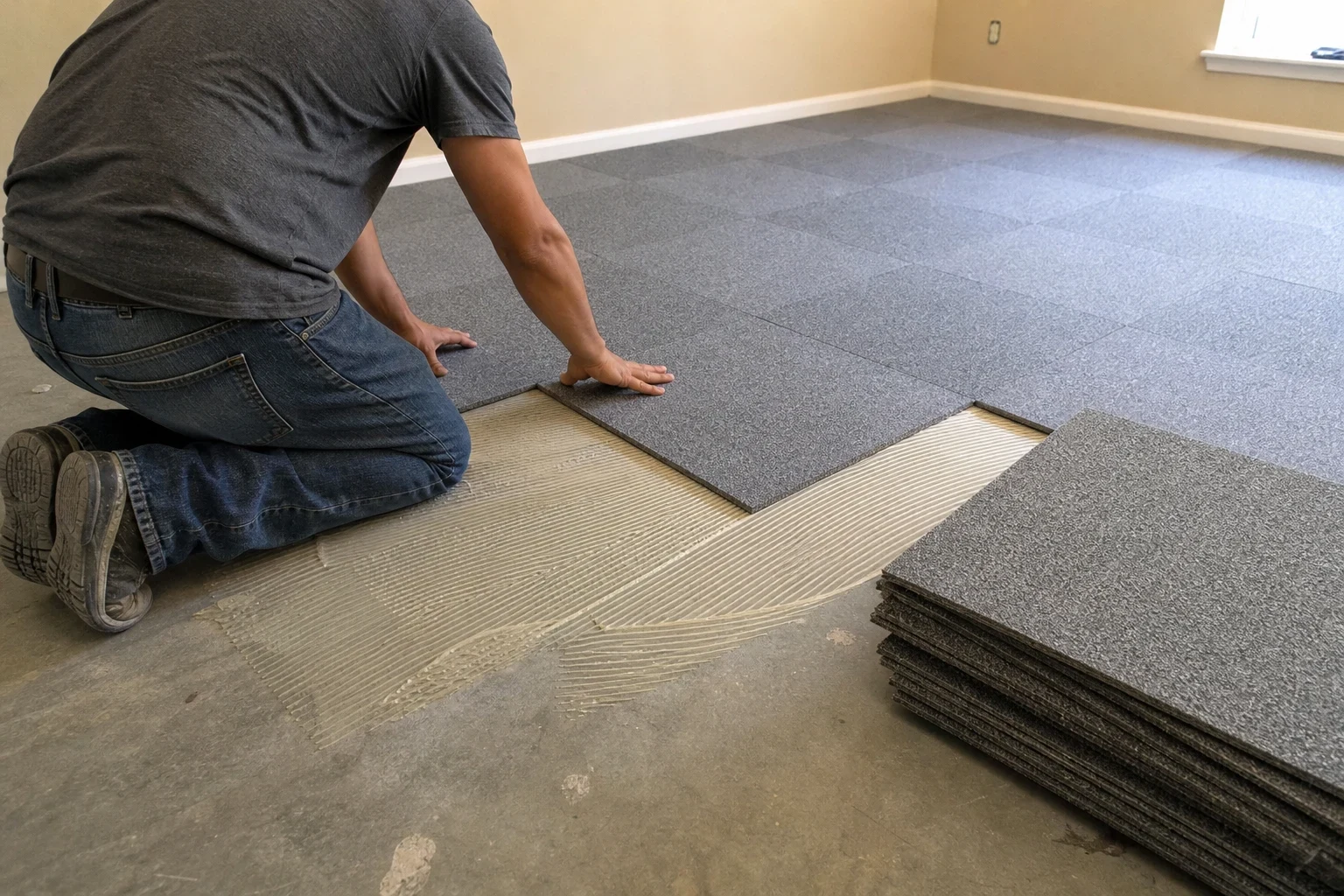
Carpet tile is soft underfoot and easy to fix. Stain one square and you swap one square. We lay it in playrooms, home offices, game rooms and converted garages. First we check the floor underneath, because old slabs and past repairs decide how flat those tiles stay.
When carpet tile is the right call
Carpet tile comes in squares with a firm backing. Each square sits on its own, held down by a release adhesive that lets you lift it later. That makes it a good fit for rooms that take a beating: a kids' room, a home gym, a study where a desk chair rolls all day, or the back room where the dog sleeps.
It is not the answer for every room. In a bedroom or formal living room where you want a deep, unbroken carpet, wall-to-wall carpet installation usually feels better underfoot. If that is the better fit, we will say so.
Older houses add a wrinkle. Carpet tile is thin, so bumps, cracks and old glue ridges in the floor below start to show through. Many houses around West University Place have had a few floors laid over the same slab or subfloor through the years. We look at what those jobs left behind before we price yours.
What the job includes
- A real look at the floor
- We lift a corner of what is down now and check what is under it. We look for cracks, high spots, old adhesive and signs of moisture.
- Tear-out of the old floor
- We pull up old carpet, pad, tack strip and staples, or old vinyl and tile. If we find black adhesive or old sheet goods that could contain asbestos, we stop and talk with you about testing before anyone scrapes it.
- Floor prep
- High spots get ground down. Cracks and low areas get patched with leveling compound. Glue ridges get scraped flat so they don't print through the tiles.
- Layout and pattern
- We snap center lines so the cut tiles at each wall come out even. You pick the pattern, such as all one direction, quarter-turn or a brick offset, and we line it up through the doorways.
- Install, trim and transitions
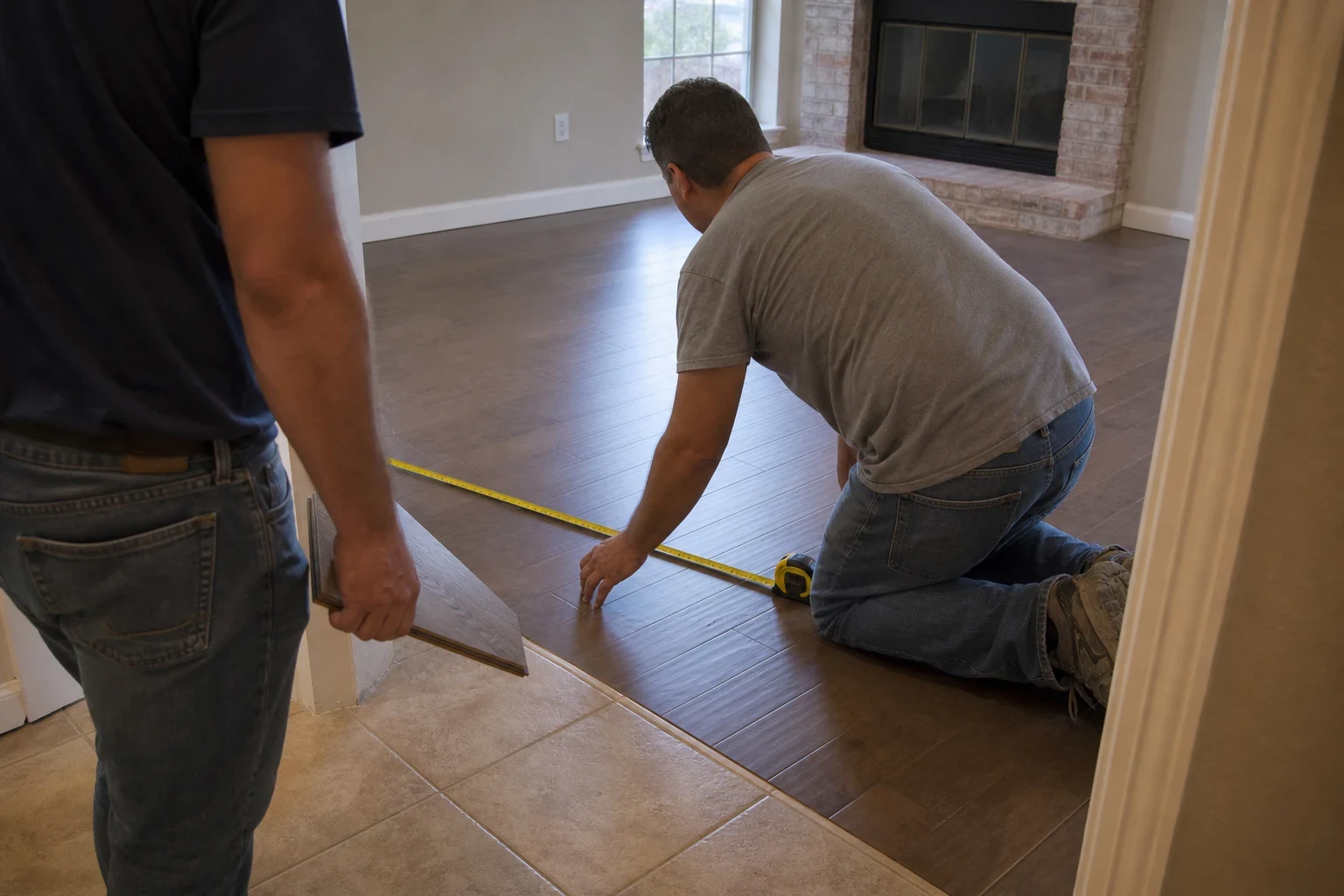
- Tiles go down in the adhesive, get rolled and are cut tight at walls, vents and door casings. Where the carpet tile meets wood, vinyl or tile, we set a transition strip so nobody catches a toe.
- Spares left with you
- We leave the extra squares in a labeled box. Down the road, a ruined tile is a five-minute swap.
Signs carpet tile fits your room
One spot that keeps staining
A juice spill by the couch or a pet accident by the door that never fully comes out. With tiles, you replace that square and move on.
Worn paths in wall-to-wall carpet
If you can see where everyone walks, the room gets more traffic than regular carpet likes.
Bare concrete in a converted room
Garage conversions and add-on rooms often sit on plain slab. Carpet tile gives you a soft floor without a pad soaking up whatever the concrete gives off.
A room whose job keeps changing
Nursery, then playroom, then teen hangout, then office. Squares can be swapped or rearranged as the room changes.
Near a back door or laundry area
Carpet tile is not waterproof. But a soaked square can be pulled up so the floor dries, then put back or replaced.
What moves the price
Carpet tile pricing comes down to two things: the tile you pick and the shape the floor is in. In an older house the second one often matters more. Every item goes on its own line so you can see where the money goes.
Tile grade and backing
Thicker pile and cushioned backings cost more than thin, firm ones. We can show you both and tell you which holds up in your room.
What is under the old floor
A clean, flat slab needs little work. Cracks, old glue and patchy repairs take grinding and leveling time.
What has to come out
Pulling carpet and pad is quick. Glued-down vinyl or old tile takes longer, and suspect materials need testing first.
Room shape and pattern
Closets, angled walls and lots of doorways mean more cuts. Some patterns create more waste than others.
How the job runs
- 1
The phone call
Tell us the room, what is on the floor now and how you use it. We set a time to come out and see it.
- 2
Measure and check
We measure, test a concrete floor for moisture and note any old patches or past repairs. You get a written estimate with each item on its own line.
- 3
Tear-out and prep
We protect the doorways, take up the old floor and fix what we found underneath. We will cover how furniture gets handled when we talk on the phone.
- 4
Lay the tiles
We roll out adhesive, let it tack up, then set tiles from the center lines out to the walls. Every row gets rolled so it bonds flat.
- 5
Cleanup and walk-through
We haul off the old flooring and vacuum. Then we show you the spares and how to lift a square with a putty knife.
Carpet tile questions we hear
Can carpet tile go over my old floor?
Sometimes. It can go over vinyl or tile that is flat and stuck down tight. It cannot go over carpet, cushioned vinyl or anything loose. We check before we say yes.
Will the seams show?
A little, depending on the tile and the pattern. Lower, tighter pile hides seams best. A quarter-turn pattern makes them part of the look instead of something you notice.
What do I do when a tile gets ruined?
Slide a putty knife under a corner and lift it out. Press a spare from your box into the same spot. The release adhesive is meant for exactly this.
My slab feels damp in summer. Is carpet tile a bad idea?
Not always, but we test first. Muggy Houston summers can pull moisture up through older slabs. If readings are high, we will talk about a moisture barrier adhesive or a different floor, like luxury vinyl tile.
Can you put carpet tile on my stairs?
We usually don't recommend it. Square tiles don't wrap a stair nose well and can loosen at the edge. Our Stair Flooring page covers better options.
How long will my room take?
Once the floor is ready, a single room usually goes down in a day. If the slab needs leveling, the patch has to cure first. We will tell you what to expect after we see the floor.
Tell us about the room
Let us know what is down now and how the room gets used. We will come look at the floor and give you a written, line-by-line estimate.