ServicesLaminate Flooring
Laminate Flooring in West University Place
Laminate gives you the look of wood for less, and it holds up to kids and dogs. It only works if the floor under it is flat and dry. We check that first, fix what older houses tend to hide, then lay planks that lock tight and stay put.
What Laminate Is and When It Fits
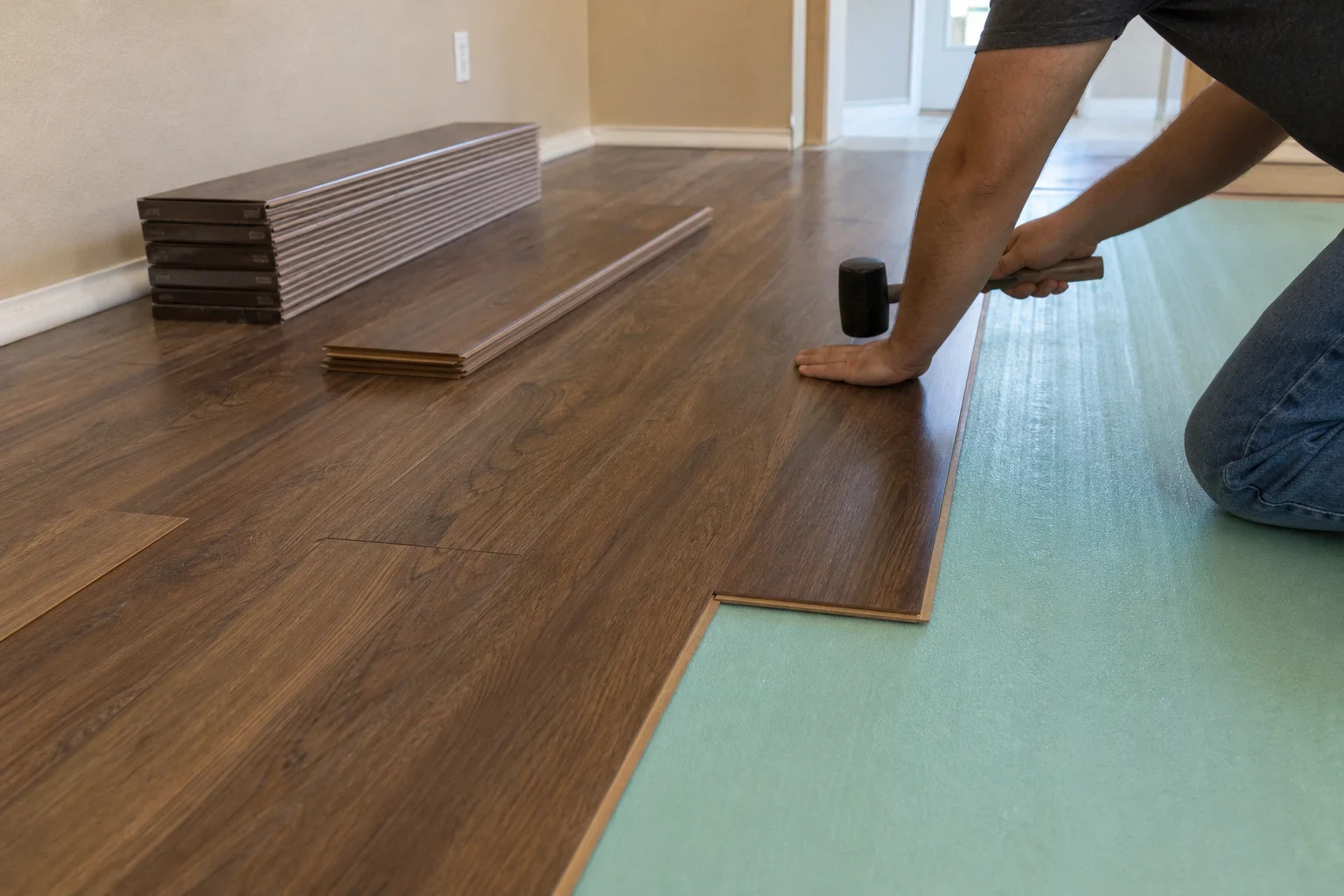
Laminate is a plank with a dense fiberboard core, a printed photo layer and a hard wear layer on top. The planks click together and float over a pad. Nothing is glued or nailed to the floor below.
That makes it a good pick for bedrooms, living rooms, halls and dens. It is scratch resistant and costs less than solid wood. It is not the best pick for a full bathroom or a laundry room. Standing water can swell the core at the seams. If a room sees a lot of water, we will tell you, and we may point you to luxury vinyl plank or tile flooring instead.
In an older house, the work is mostly about what is under the old floor. Past repairs, stacked layers and uneven slabs all show up in a floating floor. We plan for that before the first plank goes down.
What the Job Includes
- Removing the old floor
- We pull up carpet, pad, tack strip or old laminate and haul it away. If we find old 9-inch tile or black glue, we stop. Those materials can contain asbestos, so we recommend testing before anything is torn out.
- Flattening the subfloor
- A floating floor needs a true base. Most laminate makers allow only a small dip, roughly 3/16 of an inch across a 10-foot span. We sand down the humps and pack the low spots with cement patch or self-leveler. Skip this and the planks flex, click and work their joints loose.
- Moisture barrier and underlayment
- On a concrete slab we lay a plastic vapor barrier so ground moisture stays out of the core. Then a pad goes down to cushion the floor and cut the hollow sound.
- Door jambs and expansion gaps
- We undercut door casings so planks slide under them clean. We leave a gap at every wall so the floor can move with the seasons.
- Trim and transitions
- Baseboard or quarter round covers the gap. We set transition strips where laminate meets tile or carpet, and we fit them at doorways so nothing catches a toe.
Signs Your Floor Is Ready for Laminate
Worn carpet in main rooms
Matted paths, stains that come back and pet odor are good reasons to switch. Laminate wipes clean and does not hold dander.
Old laminate that is peeling or gapping
Swollen edges, gaps between planks or a floor that bounces mean the first install skipped steps. We find out why before we lay a new one.
Mismatched floors from past remodels
Older houses often have a different floor in every room after years of patch jobs. Laminate can run through the whole space at one height.
Squeaks or soft spots underfoot
On a pier-and-beam house this can point to loose subfloor or tired joists. We look before quoting so you are not surprised mid-job.
How Install Day Goes
- 1
Look at the rooms first
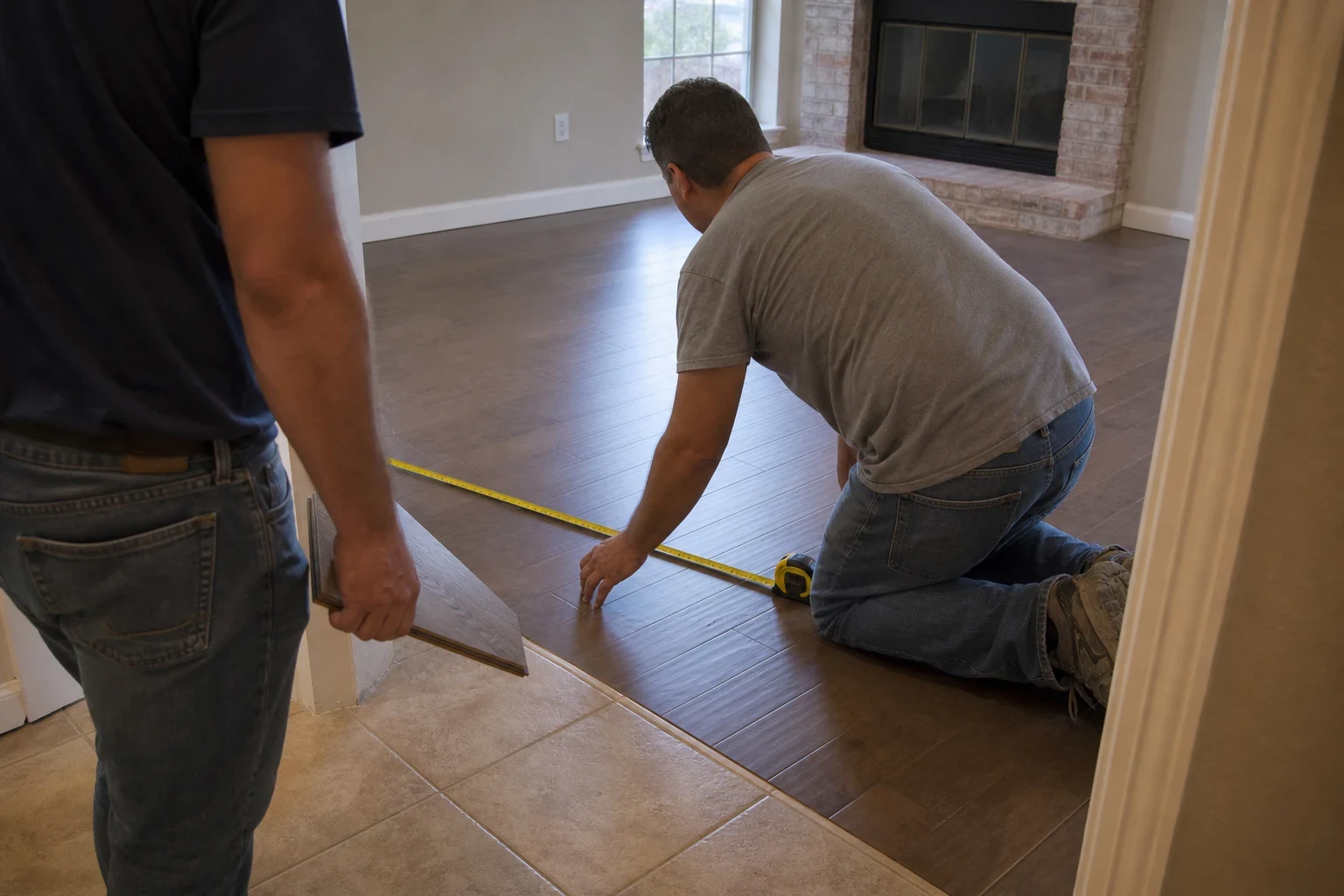
We measure, lift a corner where we can and check the subfloor for level and moisture. You hear what we found in plain words.
- 2
Let the planks settle
Boxes sit in your home for a couple of days before install. The planks adjust to your indoor air so they do not shrink or swell after they are down.
- 3
Tear out and prep
Old flooring comes out, and we fix and flatten the subfloor. This can take longer than the install itself in an older house.
- 4
Lay the floor
Barrier, pad, then planks, with joints staggered so they look natural. We cut around vents and jambs and keep the wall gaps even.
- 5
Trim and clean up
Baseboards and transitions go on. We vacuum, haul off scraps and walk the floor with you.
What Moves the Price
We price laminate after we see the rooms. Square footage matters, but in older houses the condition under the old floor often matters more. You get the numbers explained before we start.
- Subfloor condition
- A flat slab is quick. Patched concrete, dips from old repairs or loose plywood need leveling or fastening first.
- What comes up
- One layer of carpet is easy. Glued-down vinyl, stacked floors or materials that need testing add time.
- The laminate you pick
- Thicker planks, better wear layers and water-resistant lines cost more than basic boards.
- Room layout
- Lots of doorways, closets, angles and vents mean more cuts. Stairs are a separate job, covered on our stair flooring page.
Laminate Questions We Hear
Something not covered here? (346) 545-5749
Can laminate go in my kitchen?
Often, yes. A water-resistant laminate holds up fine to normal spills if you wipe them up. A slow leak under a sink or dishwasher is a different story, and it can swell the core. If your kitchen has had leaks before, we may suggest luxury vinyl plank.
How is laminate different from luxury vinyl plank?
Laminate has a wood-fiber core and feels harder and more like real wood underfoot. It also resists scratches well. Vinyl plank has a plastic core and handles water better. We will tell you which fits each room.
Can you put it over my old floor?
Sometimes over a flat, well-stuck sheet vinyl or tile. Never over carpet. Stacking floors raises the height at doors and hides problems, so in most older houses we take the old floor up.
Why does some laminate sound hollow?
Usually a cheap pad or a subfloor that was not flattened. When the plank sits on a dip, it flexes and clicks. A good underlayment and proper leveling fix most of it.
How long does a job take?
A few rooms often go in over a day or two once the planks have settled. Heavy subfloor repair can add time. We give you a plan for your rooms when we look at them.
Let's Look at What Is Under Your Floor
Tell us which rooms you want done and what is down now. We will set a time to come check the subfloor and talk through laminate for your home.