ServicesLuxury Vinyl Tile
Luxury Vinyl Tile in West University Place
Luxury vinyl tile gives you the look of stone or ceramic with a softer, warmer feel and real water resistance. In an older house, the floor underneath decides how it turns out. We check what's under there, fix what needs it, then lay tile that stays flat and tight.
What luxury vinyl tile is and when it fits
Luxury vinyl tile, or LVT, is a layered vinyl product cut into squares or rectangles. A printed design layer and a clear wear layer sit on a rigid or flexible core. It handles spills, pets and kids well, and it's quieter and warmer underfoot than ceramic.
It's a good call for kitchens, baths, laundry rooms and entries, where water and traffic are the problem. If you want a wood look running through the whole house, our Luxury Vinyl Plank page covers that. If you want real porcelain or stone, see Tile Flooring.
Older houses are where LVT gets tricky. Thin vinyl shows every dip, old patch and seam below it. On these jobs, most of the real work happens before the first tile goes down.
What the job includes
Checking what's already down
We pull a floor vent or lift a corner to see how many layers are there. It's common to find sheet vinyl over old tile over plywood. That tells us what has to come up and what can stay.
Handling old vinyl with care
Vinyl tile and sheet flooring from decades back, and the black adhesive under it, can contain asbestos. We don't sand or scrape it blind. If it looks suspect, we'll talk about testing first, or covering it instead of tearing it out.
Flattening the subfloor
LVT needs a flat base. We grind high spots, fill low ones with patch or self-leveler, and screw down loose plywood that squeaks or flexes.
Moisture checks on slabs
Slabs around the Houston area can push moisture up, especially older ones without a good vapor barrier. We test first, then choose between a click floor with the right underlayment or a glue-down tile with the right adhesive.
Trim, transitions and doors
We undercut door jambs so tile slides under them and fit transitions to the next room. Baseboard and quarter round get reset or replaced. Doors that drag get trimmed.
Cleanup
Old flooring, scraps and boxes leave with us. We vacuum and wipe down the new floor before we go.
Signs it's time for new vinyl tile
Curling or cracked vinyl
Sheet vinyl lifting at the seams or tiles cracking at the corners lets water get underneath. That's when the plywood starts to rot.
A soft spot by the tub or toilet
A spongy feel near plumbing usually means a past leak. We find it and replace the bad subfloor before anything new goes down.
Grout you can't get clean
Ceramic with dark, crumbling grout lines is a common reason people switch. Some LVT can go over sound tile that's still stuck down tight, once the grout lines are filled and leveled.
Floors that step up between rooms
Years of add-ons and patch jobs can leave a kitchen higher than the dining room. New flooring is a good time to even that out.
Hard, loud floors
If ceramic feels harsh on your feet or echoes when the kids run through, vinyl is softer and quieter.
How an LVT job runs
- 1
Walkthrough and measure
We measure, check moisture and look at what's under the current floor. You get a written estimate that lists prep work separately from the tile.
- 2
Get the rooms ready
Furniture gets moved, and appliances get pulled if the kitchen is part of the job. The tile sits in your home for a while so it adjusts to the room temperature before we lay it.
- 3
Tear out and prep
Old flooring comes up unless we're covering it. We fix soft spots, level the low areas and clean the base so nothing telegraphs through.
- 4
Lay the tile
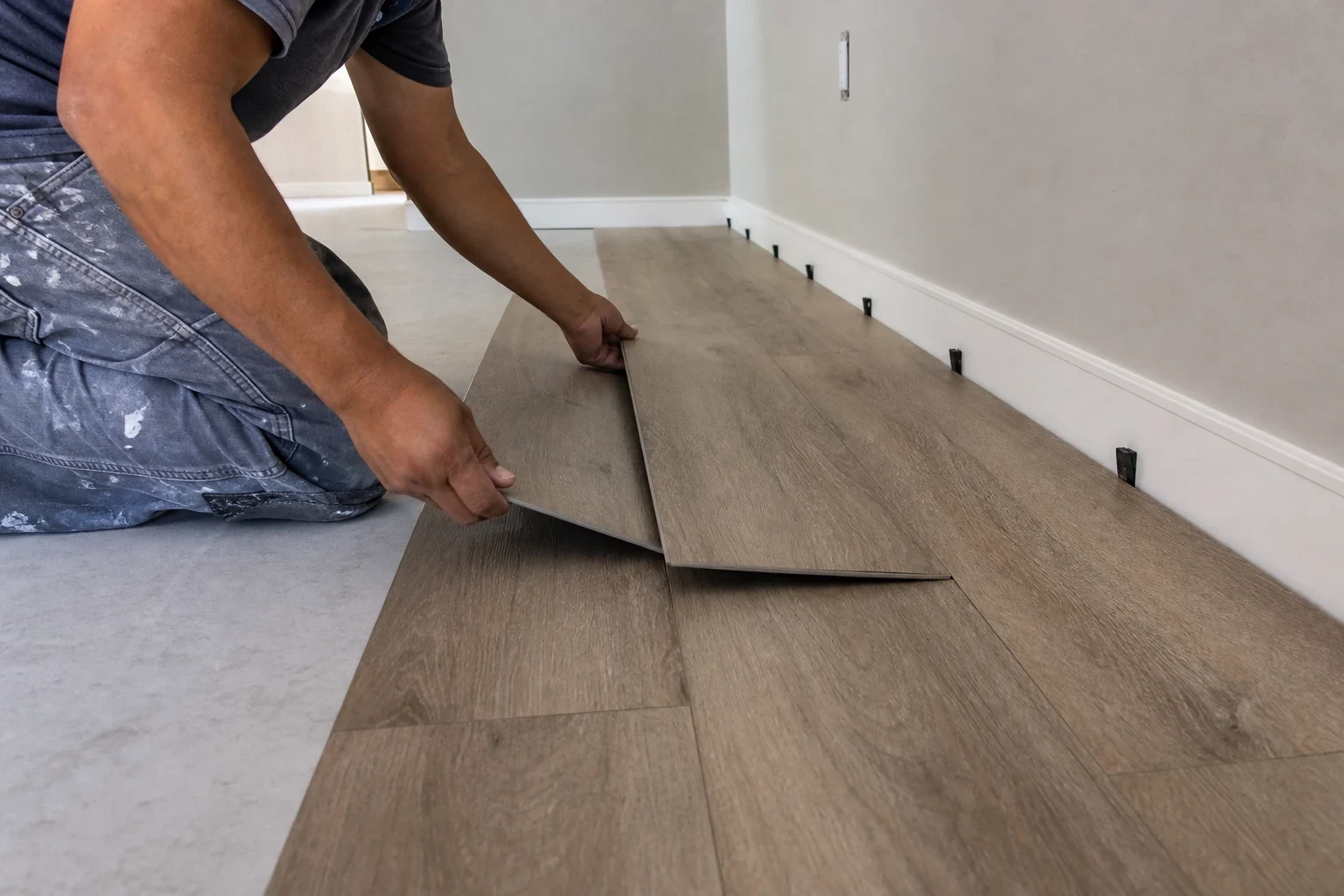
We snap layout lines from the center of the room so the cuts at each wall come out even and no thin slivers land at a doorway. Click tiles lock together. Glue-down tiles get rolled into the adhesive.
- 5
Final check together
Trim goes back on, transitions go in and the scraps get hauled out. Before we leave, we look over every room with you. We also point out which cleaners are safe and what to skip, like steam mops and rubber-backed rugs.
What moves the price
Two LVT jobs of the same size can cost very different amounts. Most of that difference is in the prep, not the tile. Your estimate shows each part on its own line so you can see where the money goes.
- Square footage and layout
- More rooms mean more material. Closets, corners and angled walls mean more cuts and more time.
- What has to come up
- One layer of carpet comes out fast. Ceramic set in mortar, or several layers of old vinyl, takes longer and adds disposal.
- Subfloor condition
- Leveling compound, rotted plywood or loose boards on a pier-and-beam house can be a big share of the job. We won't know for sure until we see it, and we'll show you what we find.
- The product you pick
- Wear layer thickness, core type and click versus glue-down all change the cost. A thicker wear layer costs more and holds up better in a busy kitchen.
- Kitchens and baths
- Pulling and resetting a toilet, dishwasher or fridge adds time. So does cutting around cabinets and tub fronts.
Questions about luxury vinyl tile
Something not covered here? (346) 545-5749
Can LVT go right over my old floor?
Sometimes. If the old floor is one layer, flat and stuck down tight, we can often go over it after leveling. Cushioned sheet vinyl, carpet or anything loose has to come up. We'll tell you which it is once we look.
What's the difference between LVT and LVP?
Same material, different shape. LVT comes in tiles that look like stone or ceramic. LVP comes in long planks that look like wood. The prep and install are much the same.
Is luxury vinyl tile waterproof?
The tile itself won't swell from water, so spills and mopping are fine. Water from a leak can still get under it and damage the subfloor. That's why we fix old leak damage before we install.
Will it work in a house on pier and beam?
Yes. We check for bounce and loose boards first, because vinyl shows movement. Older plank subfloors often need a layer of plywood or underlayment on top before the tile goes down.
How is LVT different from VCT?
Vinyl composition tile is the thinner, harder tile you see in schools and stores, and it needs regular waxing. LVT is thicker, softer, has a printed look and doesn't need wax. We install both, and our Vinyl Composition Tile page has more on it.
How soon can we walk on it?
Click LVT can be walked on as soon as we finish. Glue-down usually needs about a day before heavy furniture goes back. We'll give you the timing for the product you choose.
Let's talk about your LVT project
Tell us which rooms and what's down now. We'll set a time to measure and check the floor, then give you a written estimate.