ServicesHardwood Flooring
Hardwood Flooring in West University Place
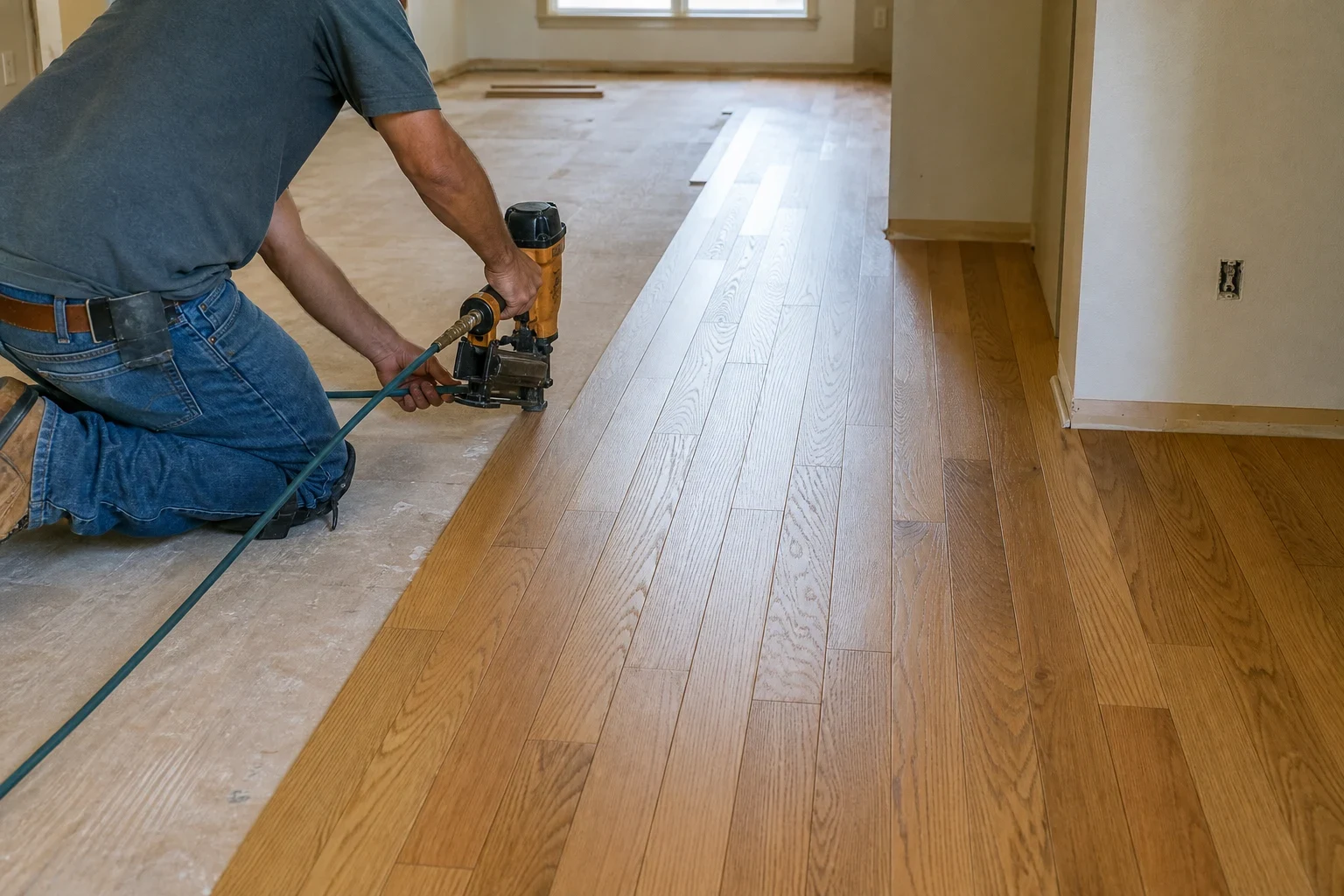
We install solid and engineered hardwood in your home. Before a board goes down, we pull up what's there, look at the subfloor and fix what an older house has been hiding. Then we lay the floor flat, tight and trimmed out clean.
Real wood, laid on a floor that's ready for it
Hardwood is the right call when you want a floor that feels solid underfoot and looks like it belongs in the house. It's also the least forgiving material we put down. Wood moves with moisture, and it shows every dip and squeak in the floor below it.
That's why most of our hardwood work starts with demolition and a look underneath. Older houses come with surprises: patched plywood, a second layer of sheet vinyl under the carpet, a slab that was never flat, joists that sag near an old bathroom. We find those first and tell you what we see.
We'll also tell you which wood fits your house. Over a concrete slab, engineered hardwood is usually the better pick. Over a pier-and-beam floor, solid hardwood nailed to the subfloor works well.
What a hardwood job with us includes
- Tear-out and haul-away
- We remove the old carpet, pad, tack strip, tile or vinyl and take it with us. If we find older layers underneath, we stop and show you before going further.
- Subfloor check and repair
- We look for soft spots, loose sheathing, high and low areas and old water damage. Squeaky spots get screwed down, bad plywood gets replaced and low areas on a slab get leveled.
- Moisture testing
- Wood and damp concrete don't mix. We test the slab or subfloor and the new boards, then let the wood sit in your home until it matches the room.
- Installation
- Solid hardwood is nailed down over plywood. Engineered hardwood is glued down or floated, depending on the product and what's under it. We stagger the joints and leave the expansion gap the wood needs.
- Trim and transitions
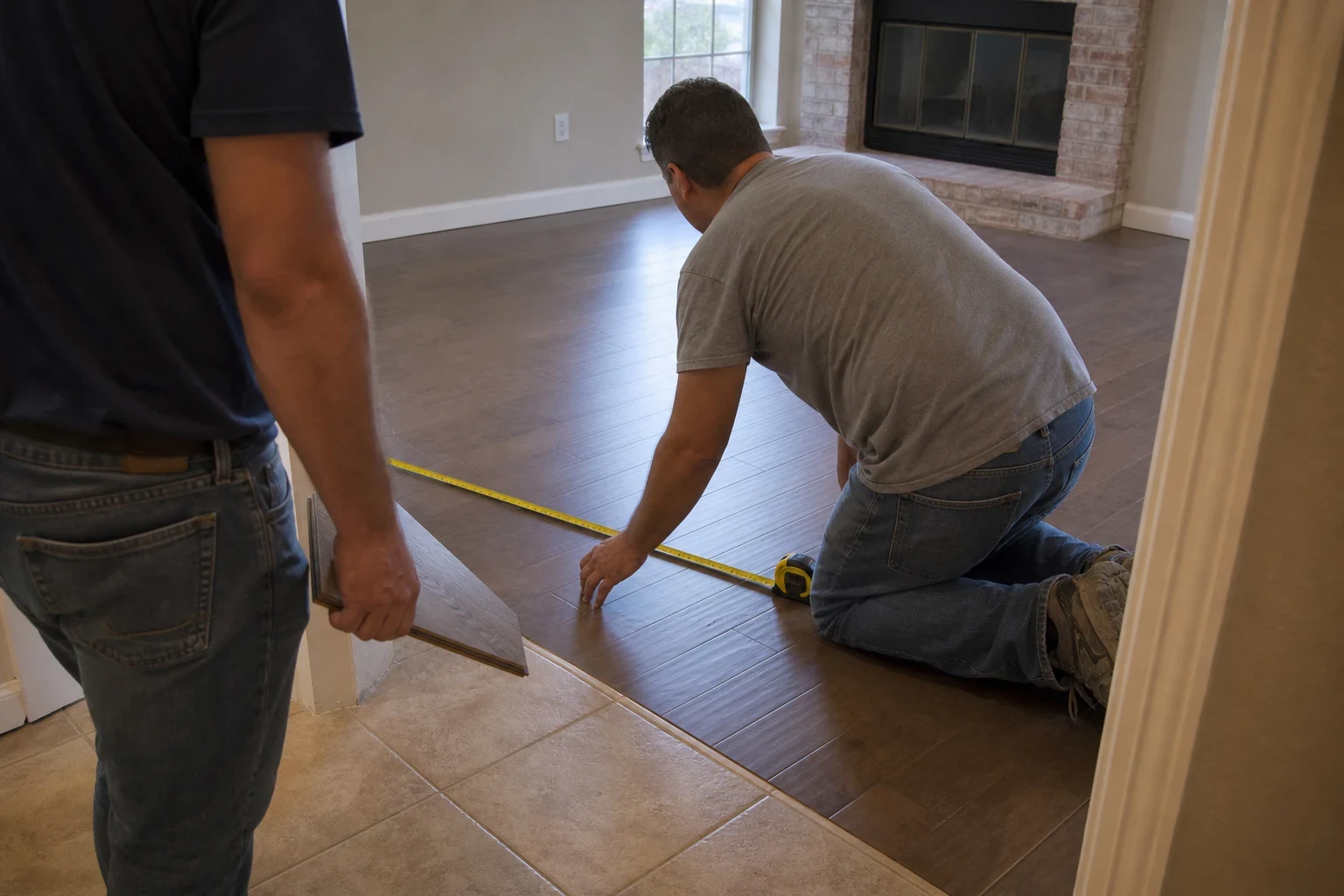
- We undercut door casings, pull and reset or replace baseboards and fit thresholds where the wood meets tile or another room.
Signs it's time for new hardwood
Carpet that's done
Matted traffic paths, stains that come back and a musty smell are good reasons to pull it. Wood is easier to keep clean.
Floors that bounce or squeak
Movement underfoot usually means loose subfloor or tired fasteners. New flooring is the right time to fix it from the bottom up.
Mismatched rooms
Older houses often have a patchwork of past remodels. One run of hardwood through the main rooms ties the house back together.
Water damage from an old leak
Cupped boards or a stained subfloor near a kitchen or bath need to come out. We replace the damaged base before new wood goes in.
Worn-through flooring
When the wear layer is gone or boards are split and loose, it's time for a new floor rather than more patches.
How the job runs
- 1
Look and measure
We come out, measure each room and check the floor you have now. We ask what's under it, how old the house is and what's been redone.
- 2
Pick the wood
We walk you through solid versus engineered, plank width, species and finish, and which ones suit your subfloor. You get a written estimate that spells out each part of the job.
- 3
Prep day
We move what you've agreed to, cover doorways and vents and tear out the old floor. Any subfloor repairs get done and shown to you before we install.
- 4
Install and trim
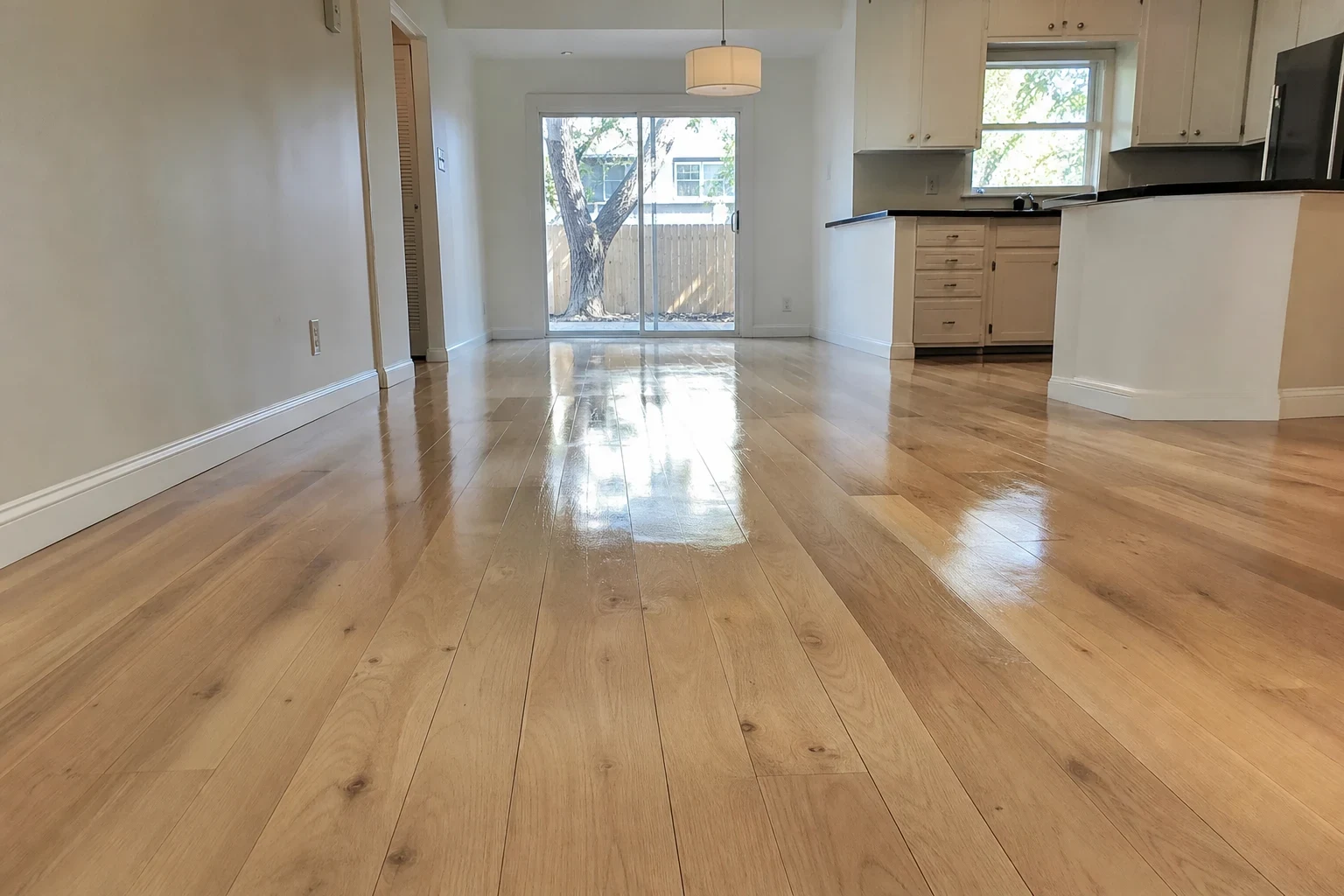
Boards go down room by room, then baseboards, transitions and door clearances. Most rooms are walkable the same day we finish them.
- 5
Walkthrough and cleanup
We vacuum, haul off the scraps and walk the floor with you. We'll point out how to care for it through the humid months and the dry ones.
What moves the price of a hardwood floor
The wood itself is only part of it. In an older home, what's under the floor can change the job more than the boards you pick. We give you the price in writing after we've seen the floor, and if we find something new once it's open, we show you before doing extra work.
- Square footage and layout
- Open rooms go faster than hallways, closets and lots of doorways. Angled walls and diagonal layouts add cutting time.
- Solid or engineered
- Species, plank width, thickness and finish all change the material cost. Wide planks and exotic woods cost more.
- What comes up first
- Carpet is quick to remove. Glued-down tile, mortar beds or several layers of old flooring take longer and add disposal.
- Subfloor condition
- Leveling a slab, replacing plywood or fixing a sag near an old leak adds labor and materials. We can't price this until we've looked.
- Trim and stairs
- New baseboards, thresholds and door trimming add to the job. Carrying the wood up a staircase is its own work, covered on our Stair Flooring page.
Hardwood questions we hear
Something not covered here? (346) 545-5749
Can you put hardwood over a concrete slab?
Yes, but usually engineered hardwood, not solid. We test the slab for moisture first and level any low spots. Then the wood is glued down or floated over a moisture barrier.
Can you lay hardwood over my old floor?
Sometimes, but we rarely recommend it. Laying over carpet won't work, and going over tile or vinyl raises the floor and hides problems. Taking it up lets us see the subfloor and fix it.
What if you find old vinyl or tile that might contain asbestos?
Some older flooring and adhesives were made with asbestos. If we come across a layer that could be one of those, we stop work in that area. We'll tell you it should be tested before anyone disturbs it.
How long does the wood need to sit before you install it?
It depends on the product and the house. We bring the boards in and check their moisture against the subfloor. Once the readings line up, we start, often after a few days.
Will hardwood hold up to Houston humidity?
It will if it's put in right and the house stays climate controlled. Engineered boards handle moisture swings better than solid ones. The expansion gap at the walls also gives the wood room to move.
Do we need to move out?
No. We work room by room, so you'll lose access to a space for a day or two. Expect some noise and dust during tear-out, which we keep behind covered doorways.
Let's look at what's under your floor
Tell us about your rooms and what's down there now. We'll set a time to come measure, check the subfloor and talk through solid versus engineered for your home.