ServicesTile Flooring
Tile Flooring in West University Place
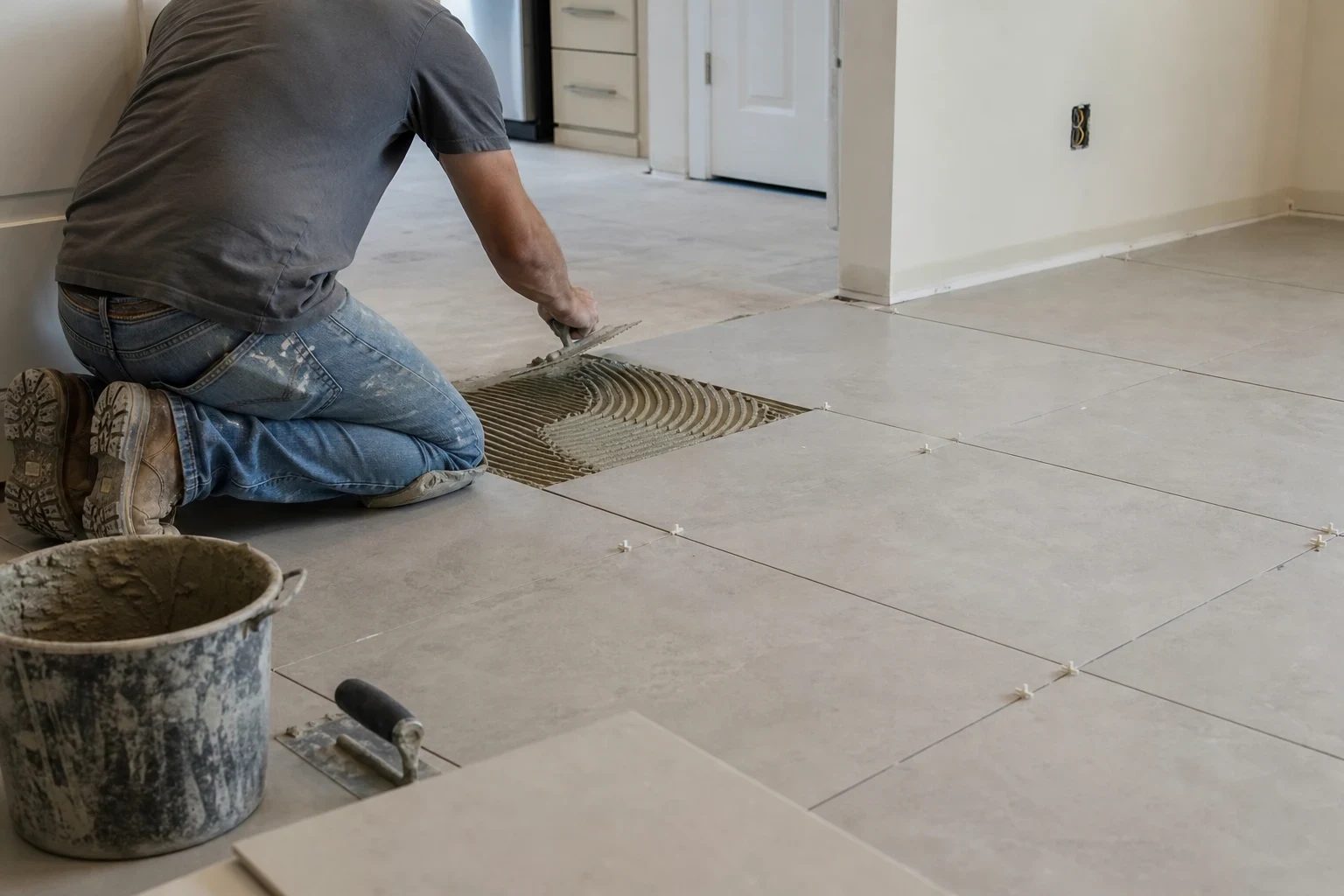
Tile lasts as long as the floor under it. We pull up what's there, look at the slab, fix the cracks and low spots, then set porcelain, ceramic or stone that stays flat and keeps its grout. You'll know what we found before any tile goes down.
When Tile Is the Right Floor
Tile is a good fit for bathrooms, kitchens, laundry rooms and entries. It shrugs off water, it cleans easily, and it stays cool underfoot through a long Texas summer. Porcelain is our usual pick because it is dense and holds up to wet areas. Ceramic works well on walls and lighter-traffic floors. Natural stone looks great but needs sealing.
In an older house, the tile itself is rarely the hard part. The hard part is what sits under the old floor: layers from past remodels, patched slab cracks, glue that never came up, a dip where a wall used to be. Tile doesn't flex. If the base moves or isn't flat, the tile cracks or the grout breaks loose. So most of our work happens before the first tile is set.
What Our Tile Work Includes
- Tear-out of old flooring
- We remove old tile, sheet vinyl, carpet or wood down to the slab or subfloor. We scrape off old adhesive and haul the debris away.
- A close look at the base
- Once it's bare, we check for cracks, low spots and soft areas, and we show you what we see. If an old layer looks like it could contain asbestos, we stop and tell you to have it tested before we go further.
- Leveling and crack membrane
- We fill low spots with leveling compound and grind down high ones. Over slab cracks we lay an isolation or uncoupling membrane so normal slab movement doesn't telegraph up into the tile.
- Setting and grouting
- Tile goes down in thinset with full coverage, and large tiles get back-buttered so there are no hollow spots. We keep edges even, then grout and clean the surface.
- Trim and fixtures
- We fit transitions at doorways, undercut door jambs, and pull and reset the toilet in bathrooms. Baseboards come off and go back on.
Signs Your Floor Needs New Tile
Cracked tiles in a line
A crack that runs across several tiles usually follows a crack in the slab below. Swapping single tiles won't fix it.
Hollow sound when you tap
A dull, hollow sound means the tile has lost its bond. Those tiles tend to crack next.
Grout falling out
Crumbling or missing grout lets water get under the tile, especially around tubs and showers.
Old sheet vinyl lifting
Curled seams and yellowed vinyl in a kitchen or bath are a good time to move to a floor that handles water better.
Edges that catch your toe
Tiles sitting higher than their neighbors usually mean the floor wasn't flat when they went in.
What Moves the Price of Tile
We price tile room by room after we see the floor. Two kitchens the same size can cost very different amounts because of what's underneath. We'll tell you where the money is going.
Condition of the base
A flat, clean slab costs the least to prep. Cracks, dips, old glue and multiple layers of past flooring all add labor and material.
Tile size and material
Large-format tile needs a flatter floor and more careful setting. Natural stone costs more to install and needs sealing.
Layout and pattern
A straight lay is quickest. Herringbone, diagonal and mixed patterns mean more cuts and more waste.
Tear-out and fixtures
Removing old tile takes longer than pulling carpet. Toilets, door trims and transitions to other floors add time too.
How a Tile Job Goes
- 1
Walkthrough and measuring
We come out, measure each room, look at the existing floor and talk through tile choices. You get a written estimate that lists the prep work as its own line.
- 2
Demo and inspection
On day one we protect nearby rooms, pull up the old floor and clean the base. If we find something that changes the plan, we show you and talk it over before doing more.
- 3
Floor prep
We patch, level and lay membrane where it's needed. Leveling compound has to cure before tile can go on it, so this step can take a day by itself.
- 4
Setting, grouting and cleanup
We lay out the room from the center so cut pieces land at the walls, set the tile, then grout once the thinset has cured. Then we reset fixtures and trim, vacuum and wipe down, and walk the floor with you.
Tile Flooring Questions
Can you put new tile over my old tile?
Sometimes, but we rarely recommend it. It raises the floor height at doorways and appliances, and if the old tile is loose or cracked the problem carries up. We usually tear it out and look at the slab.
How soon can we walk on the new floor?
Light foot traffic is usually fine about a day after grouting. Heavy furniture and appliances should wait a bit longer. We'll tell you what the products we used need before we leave.
Will cracks in my slab show up in the new tile?
They can if nothing is done about them. That's why we lay a crack isolation or uncoupling membrane over them. It lets the slab move a little without breaking the tile above.
Should I pick porcelain or ceramic?
For floors, especially bathrooms and kitchens, porcelain is the safer choice. It's harder and absorbs less water. Ceramic is fine for low-traffic rooms and costs less.
Do you do the bathroom floor around the toilet and tub?
Yes. We pull the toilet, tile under where it sits, and reset it with a new wax ring. We tile up to the tub and finish the edge cleanly.
Ready to Get Your Old Floor Up?
Tell us which rooms you want tiled and what's on the floor now. We'll set a time to come measure and look at what's underneath.